
How to Choose the Best Diamond Engagement Ring Setting
Choosing a setting is often the hardest part of buying an engagement ring. The diamond gets most of the attention, but the setting is what protects the stone, shapes its brightness, and defines the overall look of the ring. A great setting can make a modest diamond look stunning, while the wrong one can make an excellent diamond feel plain.
This guide walks through the most popular diamond ring settings, compares solitaire and halo styles side by side, and offers practical advice on how to choose engagement ring styles that fit your lifestyle and budget.
Popular Diamond Ring Settings
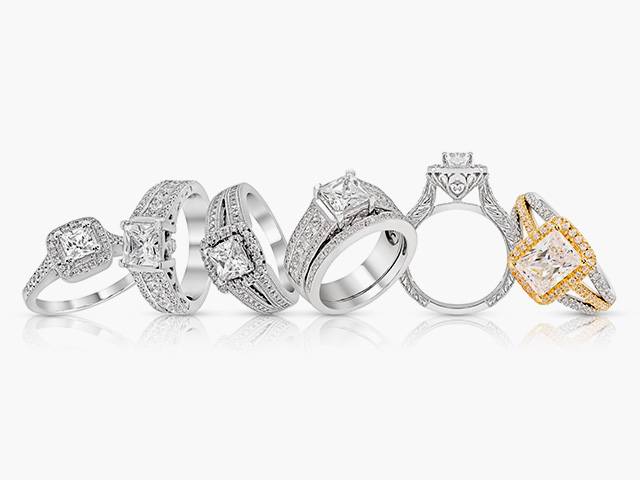
Before comparing specific styles, it helps to understand the range of options available. Our full engagement ring settings collection includes classic solitaires, halo designs, pave bands, and vintage-inspired styles, so there is a setting for nearly every taste.
Prong settings remain the most requested option because they lift the diamond above the band and let light enter from every angle. Bezel settings wrap a thin rim of metal around the stone, offering excellent protection for active hands. Pave settings line the band with small accent diamonds for extra sparkle, while three stone settings use a center diamond flanked by two smaller stones to symbolize the past, present, and future of a relationship.
Prong settings remain the most requested option because they lift the diamond above the band and let light enter from every angle. Bezel settings wrap a thin rim of metal around the stone, offering excellent protection for active hands. Pave settings line the band with small accent diamonds for extra sparkle, while three stone settings use a center diamond flanked by two smaller stones to symbolize the past, present, and future of a relationship.
Solitaire vs. Halo Ring Settings
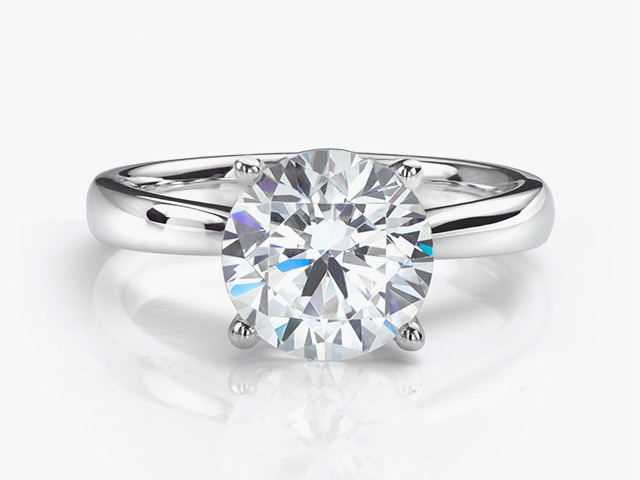
When people ask about solitaire vs. halo ring settings, the real difference comes down to emphasis. A solitaire setting places a single diamond on a simple band, drawing full attention to the stone's natural cut and clarity. It is timeless, understated, and tends to suit brides who prefer clean, minimal design.
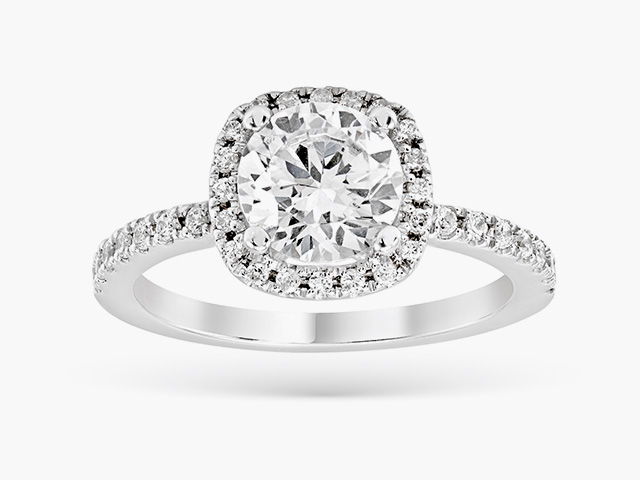
A halo setting surrounds the center diamond with a circle of smaller pave diamonds. This ring of accent stones adds noticeable sparkle and can make the center diamond appear larger than its actual carat weight. Halo styles work particularly well for smaller center stones or for anyone who wants a bolder, more dramatic look.
Neither style is objectively better. Solitaires suit those who value simplicity and versatility, while halos suit those chasing extra brilliance and a fuller appearance. Trying both in person, or exploring our bridal jewelry selection, is the best way to see which silhouette feels right.
A halo setting surrounds the center diamond with a circle of smaller pave diamonds. This ring of accent stones adds noticeable sparkle and can make the center diamond appear larger than its actual carat weight. Halo styles work particularly well for smaller center stones or for anyone who wants a bolder, more dramatic look.
Neither style is objectively better. Solitaires suit those who value simplicity and versatility, while halos suit those chasing extra brilliance and a fuller appearance. Trying both in person, or exploring our bridal jewelry selection, is the best way to see which silhouette feels right.
Best Diamond Setting Types for Rings
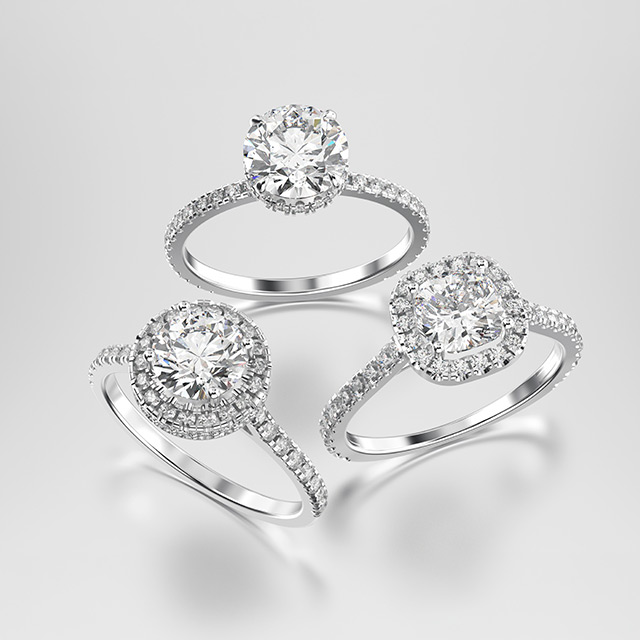
Beyond solitaire and halo, several other setting types are worth considering when narrowing down the best diamond setting types for rings:
Tension settings hold the diamond in place using pressure from the band itself rather than prongs, creating a modern, floating effect.
Cathedral settings raise the center stone with arches that curve up from the band, adding height and an elegant profile.
Cluster settings group several smaller diamonds together to mimic the appearance of one large stone at a lower cost.
Each type balances brilliance, security, and price differently, so the right choice depends on how the ring will be worn day to day.
How to Choose Engagement Ring Styles

Learning how to choose engagement ring styles comes down to matching the setting to how you actually live, not just how the ring looks in a case. Four factors tend to matter most: lifestyle, diamond shape, budget, and metal.
Lifestyle
Someone who works with their hands day to day usually does better with a low-profile bezel or tension setting, since there is less metal to catch on gloves, fabric, or tools. Someone who prioritizes maximum sparkle over practicality often prefers a halo or pave design instead.
Diamond Shape
The shape of the stone should guide the setting as much as lifestyle does. Round and cushion cuts pair beautifully with halo settings, which frame their curves with extra brilliance. Emerald and Asscher cuts tend to shine best in simple solitaire or three-stone designs that let their long, clean lines speak for themselves.
Budget
Budget is the piece that ties everything together. Shoppers looking to maximize size without stretching their budget should consider our lab-grown diamond engagement rings, which offer the same brilliance and durability as mined diamonds at a more accessible price point, freeing up room in the budget for a more elaborate setting.
Metal
Once the setting style is settled, the metal underneath it makes a lasting difference. Platinum offers superior durability and a naturally white finish that holds up well over decades. White gold is lighter on the wallet but requires occasional replating to keep its shine over the years.
Lifestyle
Someone who works with their hands day to day usually does better with a low-profile bezel or tension setting, since there is less metal to catch on gloves, fabric, or tools. Someone who prioritizes maximum sparkle over practicality often prefers a halo or pave design instead.
Diamond Shape
The shape of the stone should guide the setting as much as lifestyle does. Round and cushion cuts pair beautifully with halo settings, which frame their curves with extra brilliance. Emerald and Asscher cuts tend to shine best in simple solitaire or three-stone designs that let their long, clean lines speak for themselves.
Budget
Budget is the piece that ties everything together. Shoppers looking to maximize size without stretching their budget should consider our lab-grown diamond engagement rings, which offer the same brilliance and durability as mined diamonds at a more accessible price point, freeing up room in the budget for a more elaborate setting.
Metal
Once the setting style is settled, the metal underneath it makes a lasting difference. Platinum offers superior durability and a naturally white finish that holds up well over decades. White gold is lighter on the wallet but requires occasional replating to keep its shine over the years.
Find Your Perfect Setting at Redlands Jewelers
At Redlands Jewelers, our team helps every couple find diamond ring settings that match their story, their style, and their budget. Whether you already know you want a solitaire, a halo, or something entirely unique, browse our full range of ring settings or visit us in person for personalized guidance from our jewelry experts.
Frequently Asked Question
What are the most popular engagement ring settings available?
Solitaire, halo, pave, and three stone settings remain the most requested styles, with prong and bezel variations offering different levels of sparkle and protection for the center diamond.
How do I choose between a 4-prong and a 6-prong setting?
A 4-prong setting shows more of the diamond and gives a sleek, minimal look, while a 6-prong setting offers extra security and is often recommended for larger stones or active lifestyles.
What is the most durable engagement ring setting for daily wear?
Bezel and tension settings tend to hold up best for daily wear since they protect the diamond's edges and reduce the risk of snagging on clothing or hair.
How does the diamond shape impact the choice of ring setting?
Rounder shapes like round and cushion cuts complement halo settings well, while elongated shapes like emerald and oval cuts often look best in simple solitaire or three-stone designs.
What are the differences between platinum and white gold for an engagement ring band?
Platinum is naturally white, denser, and more resistant to wear, while white gold is more affordable but needs periodic rhodium replating to keep its bright finish over time.
Solitaire, halo, pave, and three stone settings remain the most requested styles, with prong and bezel variations offering different levels of sparkle and protection for the center diamond.
How do I choose between a 4-prong and a 6-prong setting?
A 4-prong setting shows more of the diamond and gives a sleek, minimal look, while a 6-prong setting offers extra security and is often recommended for larger stones or active lifestyles.
What is the most durable engagement ring setting for daily wear?
Bezel and tension settings tend to hold up best for daily wear since they protect the diamond's edges and reduce the risk of snagging on clothing or hair.
How does the diamond shape impact the choice of ring setting?
Rounder shapes like round and cushion cuts complement halo settings well, while elongated shapes like emerald and oval cuts often look best in simple solitaire or three-stone designs.
What are the differences between platinum and white gold for an engagement ring band?
Platinum is naturally white, denser, and more resistant to wear, while white gold is more affordable but needs periodic rhodium replating to keep its bright finish over time.
My Cart
You have 0 items in your Cart.
Loading cart items